
Intent
Separate home-care, care-home and broader care-marketing questions instead of forcing them into one page.
Taprave built CareClients from scratch around one category and one buyer problem: helping care providers generate and convert demand. The result is a live specialist property with dedicated search-intent pages and enquiries attributed to both Google and ChatGPT.
Lead-source attribution in this case study is reported from Taprave's ownership of the property. Search positions and AI answers vary by query, user and date; no permanent number-one position is claimed.
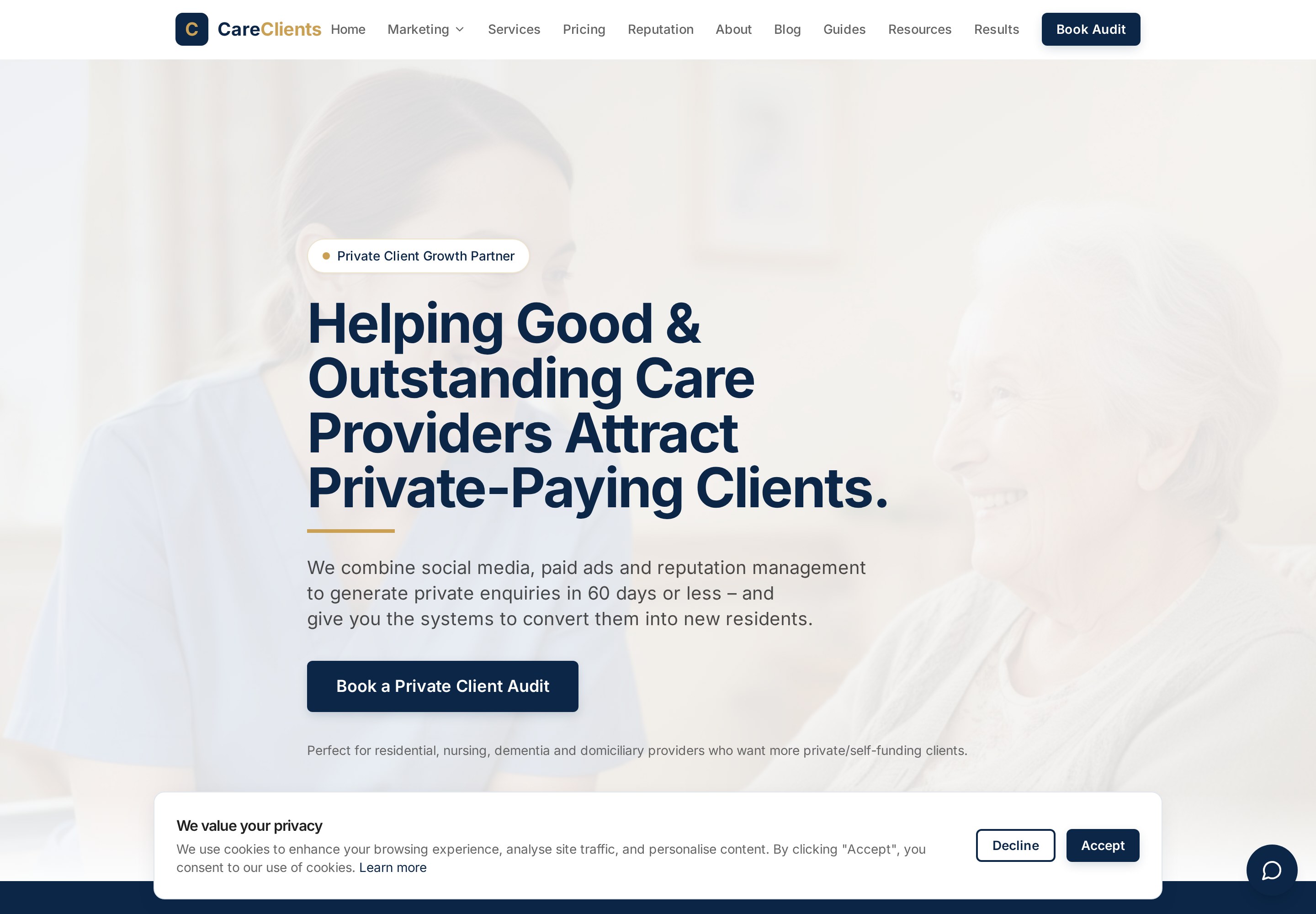
A generic digital agency page can mention care providers. CareClients goes further: the entire brand, navigation and evidence structure is organised around the questions care businesses ask before choosing a marketing partner.
That sharper entity and topic relationship makes the site easier for buyers, search engines and answer systems to interpret.
Niche positioning around marketing and growth for care providers
Brand, website and conversion journey built from a blank page
Dedicated pages for home-care and care-home marketing intent
Answer-led content architecture for Google and AI discovery
Clear enquiry paths for buyers at different stages of research
Technical SEO, structured data and crawlable internal linking
These pages are public and independently crawlable. They demonstrate the niche architecture and answer-led page strategy even when rankings change.
The site does not treat a ranking or AI mention as the finish line. Each important search question connects to a focused page, a relevant next step and source information that can travel with the enquiry.
Separate home-care, care-home and broader care-marketing questions instead of forcing them into one page.
Make the category, audience, service and ownership clear enough for a buyer to validate the specialist position.
Give each research stage an appropriate route to continue, enquire or inspect supporting evidence.
Record the reported source so Google, ChatGPT and other routes can be assessed against real enquiries.
The transferable lesson is to make the service easier to understand, verify and contact. A provider should not copy CareClients pages or publish towns it cannot serve.
Separate families seeking care from candidates seeking care work.
Give each service and genuine coverage area enough useful detail to stand alone.
Answer suitability, process, trust and response questions before the form.
Use only current, verifiable ratings, accreditations, locations and service claims.
Track whether a contact became a qualified care enquiry, not only whether a form fired.
Treat Google and AI visibility as changing discovery routes, not guaranteed positions.
Narrow the intentOne page should answer one meaningful buyer problem instead of trying to rank for a whole industry.
Connect the entityClear authorship, company facts and corroborating profiles reduce ambiguity around who produced the advice.
Show the proofPublic pages, dated evidence and honest qualification are stronger than unsupported performance claims.
We will map the service pages, evidence and conversion path before recommending a content volume.